

Fibromyalgia can make every day feel exhausting. Widespread muscle pain, fatigue, poor sleep, and brain fog can affect work, family life, and even simple chores. At Body & Mind Osteopathic Clinic in Toronto and Vaughan, we offer a gentle, assessment‑based approach that combines manual therapy, osteopathy, and registered massage therapy (RMT) to support pain relief, pain management, and better quality of life.
What Is Fibromyalgia?
Fibromyalgia is a chronic pain condition that affects the whole body. It is characterized by widespread muscle pain, tender points, and symptoms like fatigue, non‑restorative sleep, and sensitivity to touch. Although the exact cause is not fully understood, research suggests that fibromyalgia involves changes in how the nervous system processes pain signals.
Because of this increased sensitivity, even mild muscle strain or everyday stress can feel like a severe flare‑up. Therefore, treatment must be gentle, consistent, and tailored to each person.
Who Is Fibromyalgia Treatment For?
Fibromyalgia care at our clinic is designed for adults who live with long‑standing, widespread pain and feel that regular treatments have not given lasting relief. It is especially helpful if you experience chronic muscle ache, sensitivity to touch, poor sleep, or symptoms of fatigue that make daily activities harder than they should be.
This approach is also a good fit if you:
- Want gentle, hands‑on pain management instead of aggressive adjustments
- Prefer drug‑free options to complement your medical care
- Have tried standard massage but need deeper, more targeted muscle strain therapy
- Feel anxious about exercise because movement often triggers flare‑ups
- Are looking for one clinician who understands both osteopathy and registered massage therapy (RMT)
Even if you are not sure whether your symptoms are fibromyalgia or repeated muscle strain, a detailed manual therapy assessment can help clarify what is going on and what type of pain relief plan is realistic for you.
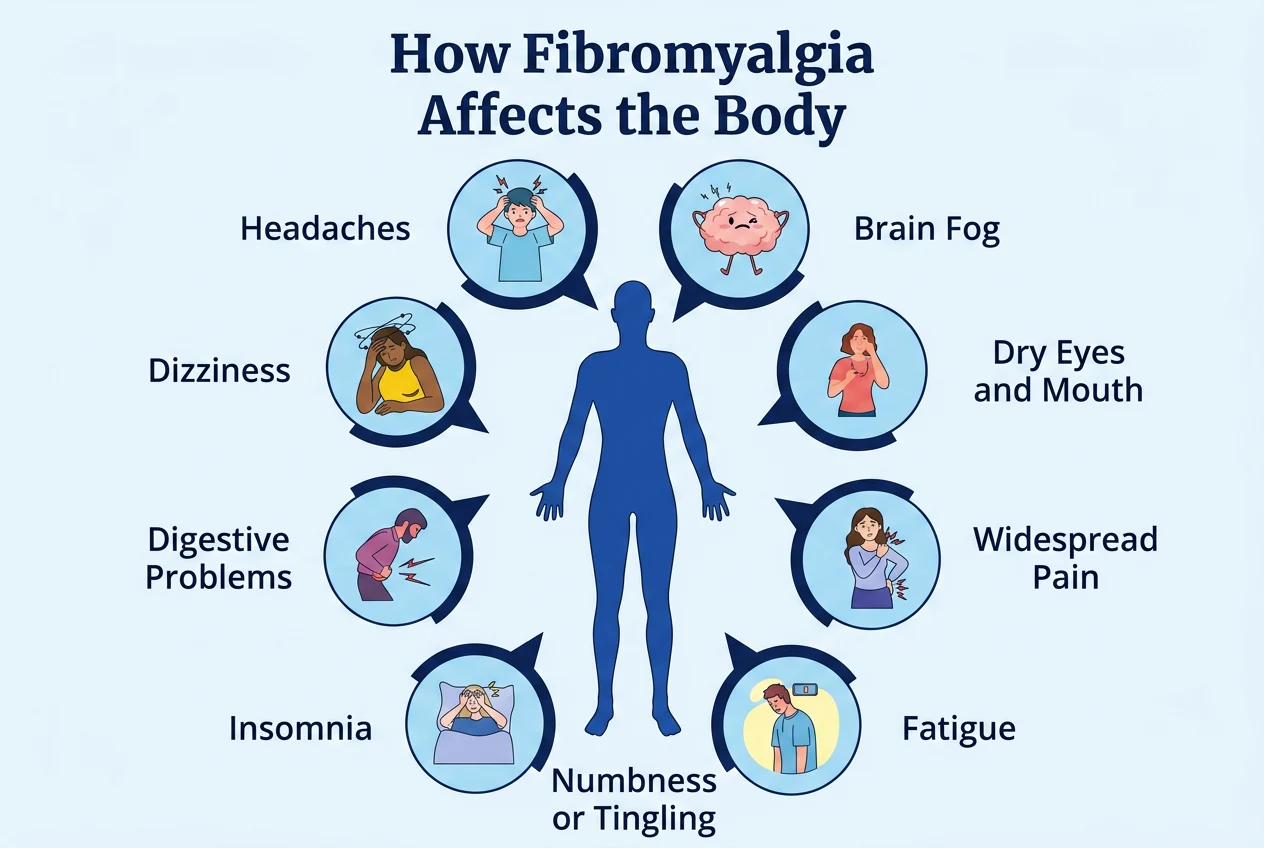
Common Symptoms of Fibromyalgia
Widespread muscle pain and chronic ache
People with fibromyalgia often describe a deep, aching muscle pain that spreads across many regions of the body. It can move from one area to another and may feel like constant stiffness, burning, or throbbing. This chronic ache can be worse after activity, during cold weather, or after poor sleep.
Fatigue, sleep issues, and “brain fog”
Many patients report:
- Persistent fatigue and low energy
- Non‑refreshing sleep, even after a full night
- Difficulty concentrating or remembering details
- Increased stress and mood changes
Because symptoms overlap, fibromyalgia is often misdiagnosed as simple muscle strain or “just stress.”
How Fibromyalgia Affects Muscles and Fascia
Muscle strain and trigger points
Fibromyalgia can make muscles feel as if they are constantly in spasm or strain, even without a clear injury. Small efforts can cause muscle strain, leading to local tenderness, tight bands, and trigger points. This often leads to repeated flare‑ups that require muscle strain treatment and ongoing muscle strain management rather than one‑time care.
Fascia, posture, and movement
Fascia, the connective tissue surrounding muscles and joints, can also become stiff and sensitive. As a result, posture changes, joint mobility decreases, and muscle and pain relief becomes more difficult to achieve with simple stretching alone. This is where manual therapy, myofascial release treatment, and osteopathy can make a real difference.
Our Approach: Manual Therapy, Osteopathy, and RMT for Fibromyalgia
Why manual therapy can help
Manual therapy, including gentle osteopathic techniques and RMT massage, aims to reduce pain, improve mobility, and calm the nervous system. Studies suggest that carefully applied manual therapy may support pain relief and better function in fibromyalgia, especially when combined with education and home exercises.
How Body & Mind treats fibromyalgia
At Body & Mind Osteopathic Clinic, your treatment is always assessment‑based and individualized. One practitioner is both an Osteopathic Manual Practitioner and RMT, which allows us to blend techniques safely and effectively.
Key goals of your treatment plan
- Gentle pain relief for muscle pain and joint stiffness
- Better sleep and reduced symptoms of fatigue
- Gradual improvement in posture and movement patterns
- Support for stress management and relaxation
Techniques We Use for Fibromyalgia Pain Management
Osteopathic manual therapy
Osteopathy focuses on how bones, muscles, fascia, and the nervous system work together. For fibromyalgia, we use very gentle techniques to avoid flare‑ups.
Typical osteopathic methods
- Soft tissue techniques and gentle stretching
- Myofascial release for sticky or tight fascia
- Light joint mobilization where movement is limited
- Cranial and visceral techniques to support overall balance
Because your system is sensitive, pressure and intensity are always adjusted to what you can comfortably tolerate.
Registered massage therapy (RMT) for fibromyalgia
RMT massage can provide muscle pain relief and deep relaxation. Instead of aggressive pressure, we use slow, controlled techniques to calm the nervous system and relieve muscle ache.
Massage techniques for chronic ache
- Light to moderate pressure for muscle and pain relief
- Long, flowing strokes to improve circulation and reduce tension
- Specific work on areas of muscle strain and trigger points
- Techniques to relieve muscle ache in the neck, shoulders, back, and hips
Because each session is tailored, we can mix relaxation, deep tissue, and myofascial work depending on your symptoms that day.

What to Expect at Your First Visit
Step‑by‑step assessment
To create the right muscle strain therapy and pain management plan, we start with a thorough but gentle assessment.
1. Detailed history
- Review of your diagnosis and medical history
- Discussion of your main pain areas and flare‑up patterns
- Questions about sleep, stress, activity, and previous treatments
2. Movement and posture check
- Simple range‑of‑motion tests
- Observation of posture, breathing, and muscle tension
- Identification of the most sensitive and strained regions
3. Personalized treatment plan
- Clear explanation of findings in plain language
- Agreement on goals: pain relief, energy, mobility, or all three
- Outline of manual therapy, exercises, and self‑care strategies
How Many Sessions Will You Need?
Fibromyalgia is a long‑term condition, so it usually requires ongoing muscle strain management rather than a quick fix. However, many people notice changes in muscle tension and quality of sleep within the first few weeks of consistent treatment.
General guidelines
Although every case is different, a common pattern is:
- First 4–6 weeks: Weekly sessions for pain relief and nervous system calming
- Next 1–3 months: Sessions every 2–3 weeks for continued pain management and mobility
- Maintenance: Monthly or as needed to prevent flare‑ups and manage chronic ache
Your plan is always adjusted based on your response and life demands.
Self‑Care Tips to Support Pain Relief Between Sessions
Gentle movement and pacing
Too much rest can increase stiffness, yet too much activity can trigger flare‑ups. Therefore, we encourage gentle, regular movement.
Helpful strategies
- Short walks or light stretching throughout the day
- Breaking tasks into smaller chunks with rest breaks
- Avoiding sudden, intense exercise spikes
Stress and sleep management
Stress and poor sleep often increase symptoms of muscle strain and fatigue.
Simple ideas to try
- Consistent bedtime routine and screen‑free wind‑down time
- Breathing exercises or mindfulness practices
- Warm baths, light stretching, or relaxation techniques in the evening
Why Choose Body & Mind Osteopathic Clinic for Fibromyalgia Treatment?
Integrated care in Vaughan and Toronto
You do not need to bounce between different clinics for pain relief, muscle pain management, and manual therapy. At Body & Mind, you can receive osteopathy and RMT from one experienced practitioner who understands fibromyalgia and its complex symptoms.
Our advantages
When to Seek Help for Fibromyalgia and Chronic Muscle Pain
You should consider booking an assessment if:
- Your muscle pain and chronic ache have persisted for more than three months
- You feel constant fatigue and non‑restorative sleep
- Everyday tasks cause muscle strain or flare‑ups
- You want drug‑free options to complement your medical care
Early, gentle manual therapy can help you regain confidence in movement and reduce fear of pain.
Book a Fibromyalgia Manual Therapy Assessmentc
Fibromyalgia may be a chronic condition, but you are not powerless. With the right combination of manual therapy, osteopathy, and registered massage therapy, you can move toward better pain relief, improved sleep, and more energy for the activities you love.
To get started:
- Book an assessment at Body & Mind Osteopathic Clinic in Vaughan or Toronto.
- Or request a video consultation to discuss whether our approach to muscle pain relief and pain management is right for you.

Written By: Vadzim Siniauski
Vadzim Siniauski is Certified Osteopathic manual practitioner DOMP, MCIO, and Registered Massage Therapist (RMT), MD (Belarus). Vadzim has an extensive experience in musculoskeletal health, pain management, and manual therapy techniques.
Our Editorial Process
At Body & Mind Osteopathic Clinic, we publish practical, experience-based content to help educate readers on osteopathy, rehabilitation, and wellness.
Writing: All our content is developed by experienced osteopathic practitioners and RMTs. It draws on reputable scientific literature, clinical research, and our real-world experience working with conditions such as back pain, joint stiffness, postural imbalances, and injury recovery.
Editing: Each article is reviewed internally by a senior practitioner to ensure accuracy, clarity, and alignment with our treatment protocols and patient education standards.
Verified by Practitioners: Before publication, content is verified by a licensed member of our clinical team to confirm that the medical information provided aligns with current best practices in manual therapy and osteopathic care.
Frequently Asked Questions
What does it feel like to have fibromyalgia?
Many people with fibromyalgia describe a constant, deep muscle ache that feels like they have over‑exercised everywhere at once. The pain can move around the body and is often joined by fatigue, poor sleep, and brain fog, so even small tasks may feel overwhelming.
Where is most fibromyalgia pain located?
Fibromyalgia pain is typically widespread rather than limited to one joint or muscle. It commonly affects the neck, shoulders, back, hips, and thighs on both sides of the body, and tender points may appear around the spine, chest, and knees as well.
At what age does fibromyalgia usually start?
Fibromyalgia can appear at any age, but it most often begins between 30 and 55 years old. Symptoms may start gradually after a period of stress, illness, surgery, or a physical injury, and they can worsen if pain and sleep problems are not addressed early.
Can osteopathy and RMT really help fibromyalgia pain?
Osteopathy and registered massage therapy do not cure fibromyalgia, yet they can significantly reduce muscle tension, improve joint mobility, and calm the over‑active nervous system. When combined with pacing, gentle exercise, and good sleep habits, manual therapy often leads to better pain control and improved daily function.
Is fibromyalgia only about pain, or are there other symptoms?
Fibromyalgia is more than just chronic pain. Many people also experience extreme tiredness, non‑restorative sleep, headaches, irritable bowel symptoms, temperature sensitivity, and difficulty concentrating. Treating fibromyalgia effectively means addressing all of these issues, not just the muscle pain.