
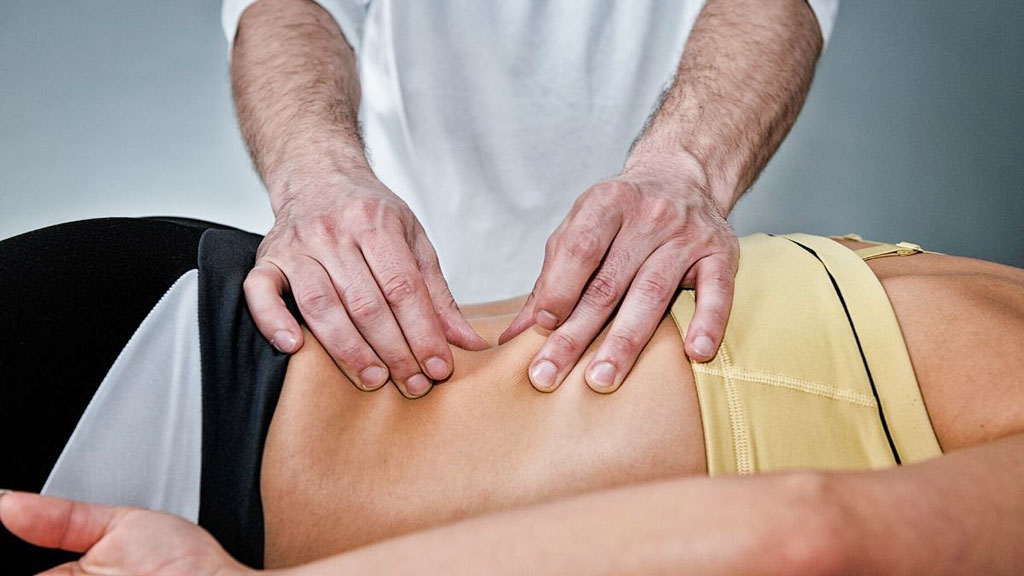
Are you struggling with stiff or tight muscles? If so, you might be experiencing myofascial pain caused by muscle irritation. Fortunately, myofascial release is a type of manual therapy, often performed as a massage, that helps reduce pain by releasing tension in affected muscles.
At Body & Mind Osteopathic Clinic in Toronto and Vaughan, we use myofascial release, osteopathy, and registered massage therapy (RMT) to target fascia restrictions, reduce muscle tension, and improve your overall movement.
What Is Myofascial Release Therapy?
Myofascial release therapy is a gentle manual therapy that focuses on the fascia, the continuous web of connective tissue that wraps your muscles, bones, and organs. When fascia becomes tight, irritated, or stuck after injury, stress, or poor posture, it can create myofascial pain and trigger points.
Because fascia connects different regions, a restriction in one area can cause pain somewhere else. Therefore, myofascial release works across broader regions of the body instead of chasing only one painful spot. This whole‑body approach fits naturally with osteopathic treatment.
Understanding Fascia and Myofascial Pain
Fascia Layers and How They Work
Fascia forms several interconnected layers that support and separate your tissues.
Main fascia layers
- Superficial fascia just under the skin
- Deep fascia surrounding muscles, tendons, and joints
- Subserous fascia around internal organs
Why fascia problems cause pain
When fascia is healthy, it glides smoothly and lets muscles move freely. However, after trauma, surgery, repetitive strain, or long‑term stress, it can become:
- Tight and shortened
- Dehydrated and sticky
- Sensitive and painful to touch
As a result, you may feel chronic stiffness, deep aching, or pulling sensations that do not respond to usual stretching.
Conditions Myofascial Release Can Help
Common issues treated with myofascial release
Myofascial release therapy can be part of your treatment plan for many pain and mobility problems.
Musculoskeletal pain
- Chronic neck and shoulder tension
- Low back pain and hip pain
- Sciatica‑type leg pain
- Knee and ankle stiffness after injury
- Plantar fasciitis and foot pain
Repetitive strain and joint conditions
- Carpal tunnel–type symptoms
- Tennis elbow pain and golfer’s elbow pain
- Frozen shoulder and rotator cuff overload
- Postural strain from desk work
Head, jaw, and whole‑body conditions
- Temporomandibular joint (TMJ) dysfunction
- Headaches and tension‑type migraines
- Fibromyalgia and widespread muscle pain
- Recovery after surgery, immobilization, or chronic stress
Because fascia affects the whole body, myofascial release often supports other therapies such as osteopathy, physiotherapy, chiropractic care, and RMT massage therapy.
Benefits of Myofascial Release Therapy
Why patients choose myofascial release
Myofascial release offers both local and global benefits for people with chronic pain, stiffness, and mobility problems.
Key benefits
- Reduces muscle tightness and spasms
- Releases trigger points and tender knots
- Improves flexibility and range of motion
- Enhances blood flow and local circulation
- Supports better posture and alignment
- Decreases pain sensitivity over time
- Promotes relaxation and stress relief
For many people, myofascial release becomes a turning point when regular massage or stretching is not enough.
How Myofascial Release Therapy Works
What to expect in a session
During your session in our Toronto or Vaughan clinic, your osteopathic manual practitioner and RMT focus on finding and releasing fascial restrictions rather than forcing movement.
Step‑by‑step process
1. Detailed assessment
- Review of your medical history and symptoms
- Posture and movement analysis
- Palpation to locate tight bands, trigger points, and restricted fascia
2. Hands‑on myofascial techniques
- Gentle, sustained pressure into tight fascial areas
- Slow stretching along lines of tension
- Broad contact instead of small, poking pressure
3. Integration and reassessment
- Recheck joint range of motion and muscle tone
- Adjust techniques based on your feedback
- Plan the next steps for osteopathy, RMT, and home care
Because the pressure is gradual and sustained, tissues have time to release without sudden pain or guarding.
Myofascial Release vs. Trigger Point Therapy
Similarities and differences
Both myofascial release and trigger point therapy address painful, tight spots in muscles and fascia. Yet, they use slightly different strategies.
Trigger point therapy
- Focuses on specific, tender “knots”
- Uses firm, localized pressure for short periods
- Often combined with stretching or massage
Myofascial release
- Works on broader fascial lines and patterns
- Uses gentle, slow, sustained pressure
- Aims to restore global tissue glide and movement
In practice, we often combine both methods during a treatment session, choosing what your body tolerates best that day.
Myofascial Release vs. Other Soft Tissue Techniques
Myofascial release and soft tissue manipulation
The Soft tissue manipulation is an umbrella term that includes massage, compression, and stretching of muscles, tendons, and ligaments. Myofascial release is more specific.
How they compare
- Soft tissue techniques
- Kneading and massage strokes
- Useful for relaxation, circulation, and recovery
Myofascial release
- Targets fascial restrictions and chronic tension
- Helpful when pain returns quickly after regular massage
Myofascial release and fascial manipulation
Fascial manipulation applies focused pressure to specific coordination centers in the fascia, often based on movement analysis. Myofascial release, on the other hand, works more broadly along tension lines.
Both approaches can:
- Reduce pain
- Improve posture and joint mechanics
- Support osteopathic treatment plans
We select the right combination based on your symptoms, pain tolerance, and goals.
Areas of the Body That Benefit from Myofascial Release
Common treatment regions
Myofascial release therapy can be used almost anywhere, but some areas respond particularly well.
Upper body
- Neck and upper back
- Shoulders and rotator cuff
- Arms, elbows, and wrists
- Chest and rib cage
- Jaw and head (including TMJ)
Lower body
- Low back and pelvis
- Hips and glutes
- Quadriceps and hamstrings
- Calves, ankles, and feet
Because fascial lines cross multiple joints, treating one region often improves movement and comfort elsewhere.
Myofascial Release with Osteopathy and RMT at Body & Mind
At Body & Mind Osteopathic Clinic, your practitioner Vadzim Siniauski is both an Osteopathic Manual Practitioner (DOMP) and a Registered Massage Therapist (RMT). This integrated training allows us to combine myofascial release with osteopathy, massage, and corrective exercise in one coherent plan.
Your treatment may include
- Osteopathic assessment of posture, joints, and movement
- Myofascial release for chronic tension and trigger points
- Soft tissue manipulation and medical massage
- Joint mobilization where needed
- Gentle stretching and mobility drills
- Home exercises and ergonomic advice
Who this approach is ideal for
Our combined osteopathy and myofascial release therapy is especially suited to:
- Office workers with neck and shoulder pain
- Active people and athletes with recurring tightness
- Patients recovering from injuries or surgery
- Individuals with chronic back pain, TMJ, or headaches
- People with fibromyalgia or long‑standing myofascial pain
Is Myofascial Release Therapy Right for You?
Although myofascial release is gentle and usually well tolerated, it may not be suitable in some situations, such as acute infections, open wounds, or certain medical conditions. Therefore, your initial assessment always includes a brief screening to ensure safety.
You may be a good candidate if:
- You have chronic muscle tension that returns after regular massage
- You feel stiff and restricted despite stretching and exercise
- You experience pain that spreads or moves along lines of tension
- You want a hands‑on, non‑drug approach to pain relief
Book Myofascial Release Therapy in Toronto or Vaughan
If tight muscles, fascia restrictions, and trigger points are limiting your life, myofascial release therapy can help you move more freely and comfortably. By combining osteopathy, RMT massage, and targeted manual therapy, we create a personalized plan to reduce pain and restore function.
To get started:
- Book an in‑person myofascial release appointment in Toronto or Vaughan.
- Or request a consultation to see how osteopathy and RMT can support your recovery.
You don’t have to live with constant muscle tightness and fascia pain. Take the next step toward easier movement and lasting relief.
Frequently Asked Questions
Is myofascial release therapy safe and are there any side effects?
Yes. Myofascial release therapy is generally safe when performed by a qualified practitioner. Some people feel mild soreness, tenderness, or fatigue after treatment, but these effects usually fade within 24 to 48 hours.
How many myofascial release sessions do I need to feel results?
Many patients feel some relief after 1 to 3 sessions. However, chronic pain, long-term tension, and postural issues may need a longer treatment plan for lasting results.
How often should I book myofascial release treatments?
That depends on your condition and goals. For active pain or tightness, weekly sessions are common. For maintenance, many patients book every 2 to 4 weeks.
What does a typical myofascial release session look like at Body & Mind Clinic?
A typical session includes a short assessment, hands-on treatment using slow sustained pressure, and a plan based on your symptoms, mobility, and treatment goals.
Will myofascial release therapy be painful or just uncomfortable?
Myofascial release should not feel sharply painful. You may feel mild discomfort or pressure in tight areas, but treatment is usually gentle, controlled, and well tolerated.
Can myofascial release help with back pain, neck tension, or headaches?
Yes. Myofascial release can help reduce muscle tension, improve mobility, and relieve pain linked to back pain, neck stiffness, postural strain, and tension headaches.
Is myofascial release therapy covered by insurance when provided by an RMT?
If myofascial release is provided by a Registered Massage Therapist, it is often covered under extended health benefits. Coverage depends on your individual insurance plan.
What should I wear and how should I prepare for my first myofascial release appointment?
Wear comfortable, loose-fitting clothing and arrive a few minutes early. It also helps to stay hydrated and be ready to discuss your symptoms, health history, and goals.
Do you combine myofascial release with osteopathy or other manual therapies?
Yes. Myofascial release is often combined with osteopathy, massage therapy, or other hands-on treatments to improve mobility, reduce pain, and support better long-term results.
Where can I book myofascial release therapy in Toronto or Vaughan?
You can book myofascial release therapy at Body & Mind Clinic in Toronto or Vaughan by contacting the clinic or using the online booking system.